Picture a jobsite at dawn, the air sharp with dew, and the quiet thrum of a compressor waiting to spool up. You need power that matches the task, not just any motor bolted on. Whether you’re framing a roof or running a nail gun, the engine is your true workhorse. So, let’s cut the noise and get to three reliable options that won’t leave you stranded.
| Albott 6.5HP Gas Powered Air Compressor 8 Gallon Portable Air Compressor | 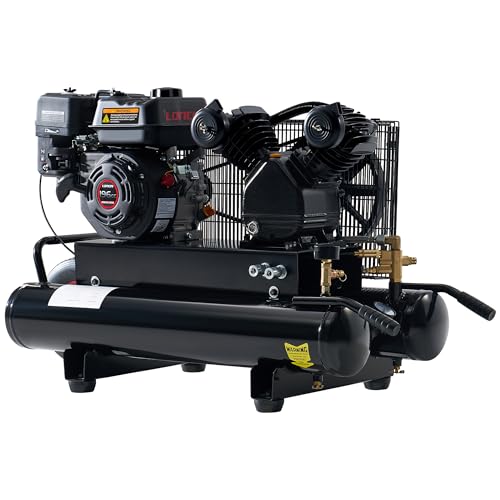 | Best Midweight | Horsepower / Engine Size: 6.5 HP (196cc Loncin engine) | Tank Capacity: 8 gallons | Maximum Pressure: 115 PSI | VIEW LATEST PRICE | Read Our Analysis |
| Albott 13HP Gas Air Compressor 30 Gallon Portable Horizontal Tank | 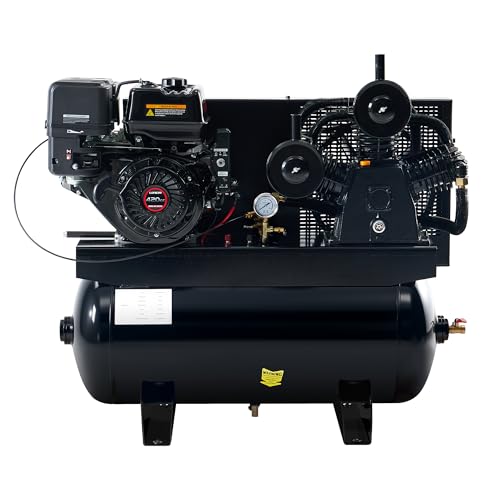 | Heavy Duty Champion | Horsepower / Engine Size: 13 HP (420cc Loncin engine) | Tank Capacity: 30 gallons | Maximum Pressure: 180 PSI | VIEW LATEST PRICE | Read Our Analysis |
| Ingersoll Rand SS3J5.5GH-WB 5.5 HP Gas Air Compressor | 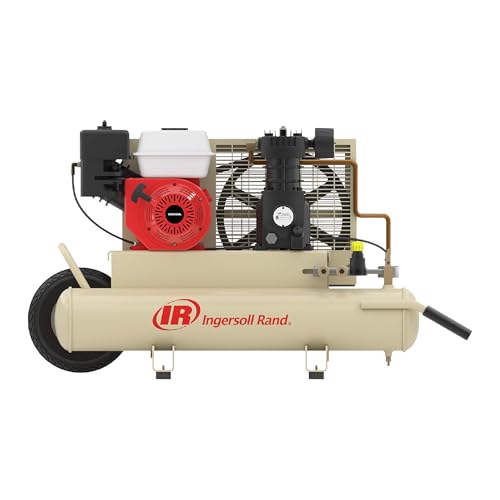 | Best Portability | Horsepower / Engine Size: 5.5 HP (Honda engine) | Tank Capacity: 8 gallons (two 4-gallon tanks) | Maximum Pressure: 135 PSI | VIEW LATEST PRICE | Read Our Analysis |
More Details on Our Top Picks
Albott 6.5HP Gas Powered Air Compressor 8 Gallon Portable Air Compressor
If you want a tough, portable workhorse without needing an electrical outlet, the Albott 6.5HP gas-powered compressor is your midweight match. Its 196cc Loncin engine cranks out 115 PSI, feeding an 8-gallon cast iron tank. You’ll get 10 cubic inches per minute, enough for nail guns or spray guns on remote job sites. It weighs 166 pounds, so you can haul it in a truck easily. Dual outlets let you run two tools at once, and the automatic safety valve keeps pressure in check. Expect around 70 decibels quieter than most gas rigs. It’s ideal for construction or farm work where power cords can’t reach.
- Horsepower / Engine Size:6.5 HP (196cc Loncin engine)
- Tank Capacity:8 gallons
- Maximum Pressure:115 PSI
- Weight:166 pounds
- Pump Type:2-cylinder cast iron pump
- Warranty:1-year manufacturer warranty
- Additional Feature:Dual air outlets
- Additional Feature:Automatic safety valve
- Additional Feature:70 dB noise level
Albott 13HP Gas Air Compressor 30 Gallon Portable Horizontal Tank
The Albott 13HP Gas Air Compressor is a heavy duty champion perfect for tradespeople who need reliable power away from electrical outlets. You get a 13-horsepower Loncin 420cc engine paired with a 30-gallon ASME-certified tank, delivering 18 CFM at 90 PSI and up to 180 PSI. Its three-cylinder cast iron pump offers quick compression, while the automatic safety valve and large sight glass simplify maintenance. Weighing 344 pounds, you’ll easily move it on a truck or service vehicle. It’s rated 4.8 out of 5 stars for a reason.
- Horsepower / Engine Size:13 HP (420cc Loncin engine)
- Tank Capacity:30 gallons
- Maximum Pressure:180 PSI
- Weight:344 pounds
- Pump Type:3-cylinder cast iron pump
- Warranty:1-year manufacturer warranty
- Additional Feature:Large sight glass
- Additional Feature:ASME-certified tank
- Additional Feature:18 CFM at 90 PSI
Ingersoll Rand SS3J5.5GH-WB 5.5 HP Gas Air Compressor
Portable air compressors don’t get much more mobile than the Ingersoll Rand SS3J5.5GH-WB. Its wheelbarrow design and twin 4-gallon tanks give you 8 gallons of total capacity, all powered by a reliable Honda 5.5 HP engine. You’ll get 11.8 CFM at 90 PSI and a max of 135 PSI, perfect for nail guns or impact tools on remote job sites.
- Durable build: Cast iron construction handles tough environments.
- Dual disconnects: Run two tools simultaneously.
- Continuous duty: No waiting for pressure to recover.
You’ll appreciate the easy portability and that 0.825-gallon fuel tank keeps you working longer. Just keep earplugs handy; it runs at 89 dB.
- Horsepower / Engine Size:5.5 HP (Honda engine)
- Tank Capacity:8 gallons (two 4-gallon tanks)
- Maximum Pressure:135 PSI
- Weight:226 pounds
- Pump Type:Durable cast iron construction
- Warranty:1-year manufacturer warranty
- Additional Feature:Wheelbarrow design
- Additional Feature:Twin 4-gallon tanks
- Additional Feature:Continuous duty operation
Factors to Consider When Choosing an Engine for Air Compressor
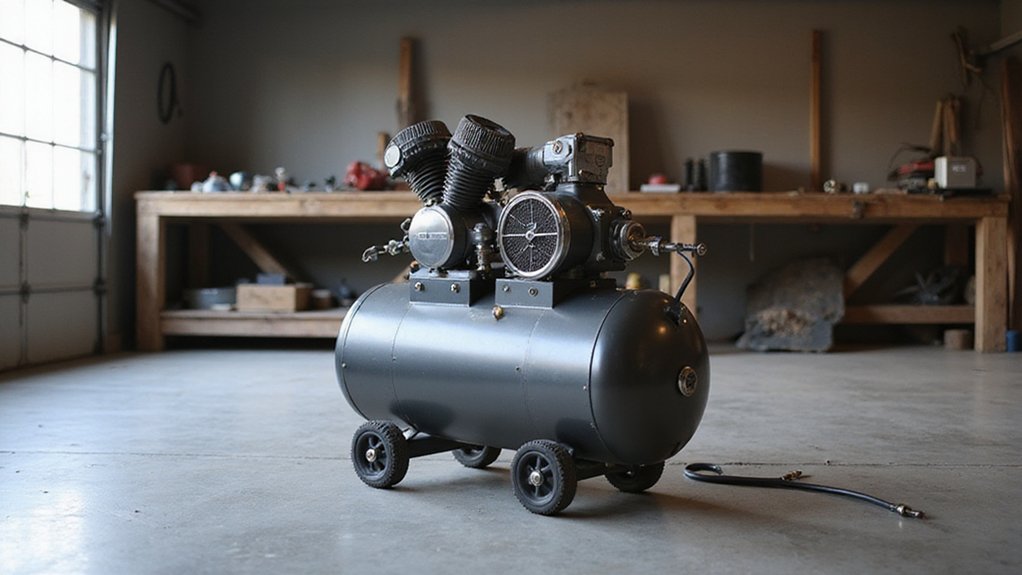
When you’re picking the heart of your air compressor, you’ve got to weigh five key factors: power output, engine type, fuel efficiency, noise level, and portability needs. Start with power output, because that’s the raw muscle that dictates how much CFM you can actually push, so match it to your tools, not your dreams. Then, you’ll want to balance engine type and fuel efficiency against noise and portability, since a loud, heavy behemoth might be great for a shop but a nightmare for a job site.
Power Output
One key factor to nail down is power output, measured in HP or CC. This number directly impacts your compressor’s ability to generate and sustain high air pressure and flow rates. Think of it as the engine’s muscle. Higher horsepower engines typically deliver more consistent performance, especially during continuous operation or demanding tasks. You don’t want your setup to choke under a heavy load, right? The right power output determines the size and capacity of the compressor it can effectively support. An engine with adequate power ensures your compressor operates efficiently without overloading or excessive wear. So, match the engine’s power to your intended application and workload requirements. It’s a simple equation: more power usually means more reliable, steady airflow when you need it most.
Engine Type
Power output gets the job done, but the engine type is what decides how you’ll power it up. Gas engines, like Honda or Loncin models, offer true portability, freeing you from electrical outlets. That’s a game changer for remote job sites. You’ll also choose between single, two, or three cylinder setups. Single cylinders keep maintenance simple, but three cylinders deliver smoother operation and better durability under heavy loads. Engine displacement and horsepower directly dictate your compressor’s ability to sustain high air pressure and flow rates. Noise levels vary too, so pick a quieter model if you’re working in noise sensitive environments. And don’t forget: a well matched engine type makes your compressor efficient and reliable, not just powerful. Choose based on where and how hard you’ll run it.
Fuel Efficiency
Two big factors decide your operating costs: how much fuel the engine gulps per hour, and how effectively it turns that fuel into compressed air. You’ll want an engine with higher fuel efficiency, as it consumes less fuel over time for the same work. Higher horsepower ratings might drink more fuel, but they often compress faster, improving overall efficiency. Properly sizing the engine for your application is key. If you overpower or underpower it, you waste fuel unnecessarily. Look for engines with fuel injection or optimized combustion systems; they beat older carbureted models hands down. And don’t skip regular maintenance. Simple tasks like tuning and oil changes keep combustion ideal, slashing fuel wastage. That routine care pays off at the pump, dollar by dollar.
Noise Level
So, how loud is your air compressor going to be? Engine noise is measured in decibels (dB), and here’s the kicker: gas engines typically hit between 70 and 90 dB. That’s the difference between a lively conversation and heavy street traffic. For residential areas or indoor work, you’ll want to aim for that quieter 70 dB mark. It’s not just about comfort, though; lower noise protects your hearing during those long jobs. The engine’s size, design, and how well you maintain it all shift that number. A well-kept, compact engine purrs, while a neglected one roars. So, prioritize a lower dB rating if your workspace values peace. You’ll thank yourself after an eight-hour shift. Choose quiet, and you choose your own sanity!
Portability Needs
Before you lock in your choice, think about how you’ll actually move this thing around. The engine’s weight and size directly dictate your compressor’s portability. Lighter engines are obviously easier to haul, but don’t ignore the frame. Look for wheels, sturdy handles, or even a wheelbarrow style setup; these features dramatically improve your ability to maneuver, especially over rough terrain.
Gas powered engines typically win for mobility, since they free you from hunting for a power outlet. That’s a huge advantage on job sites without reliable electricity. But watch out: higher horsepower engines often pack on pounds, making transport tougher. You’ll need to balance raw power with your willingness to lift.
Compact engine designs solve this nicely, optimizing space and simplifying your load. For real portability, prioritize a lighter, smaller engine paired with a smart frame. That combo lets you take your compressor wherever the work calls, without breaking your back.
Pump Compatibility
When it comes to pump compatibility, you’ve got five critical factors to nail down. First, confirm your engine’s horsepower matches or exceeds pump requirements—without that, you’ll get weak performance and constant stalling. Next, verify RPM alignment; running the pump outside its ideal speed risks damage and inefficiency. You also need sufficient torque to handle maximum load conditions without bogging down. Then, check the shaft size matches the pump’s coupling mechanism; a mismatch means no attachment at all. Finally, consider the engine’s power output and fuel type. Gas or diesel? Choose one that keeps your pump running reliably without maintenance headaches. Get these right, and you’ve got a matched pair that works hard without fighting each other.
Maintenance Requirements
Let’s talk about maintenance requirements, because this is where the real relationship between you and your engine gets tested. You can’t just set it and forget it. First, regularly check and change the engine oil, or you’re inviting unnecessary wear. Next, inspect spark plugs and swap them out when needed, keeping combustion efficient and reliable. Don’t overlook the air filter; clean or replace it periodically to stop debris from sneaking in and causing damage. And pay attention to your fuel quality, store it properly to avoid ignition problems or corrosion. Follow the manufacturer’s guidelines for routine maintenance, and you’ll extend your engine’s lifespan considerably. It’s simple: neglect these tasks, and you’ll shorten that lifespan fast. So, commit to the schedule, and your air compressor engine will thank you with consistent, long term performance.