Ever fought with a bouncy needle that won’t settle? You need a gauge that delivers rock solid accuracy, every single time. Let’s look at three liquid filled champions built to handle the relentless vibration of your air compressor without missing a beat.
| SENCTRL 0-160 Psi Liquid Filled Air Pressure Gauge 1/4″ NPT Lower Mount | 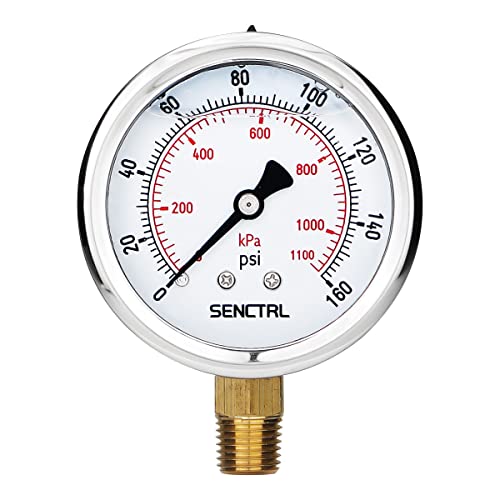 | Best All-Around | Measurement Range: 0-160 psi | Connection Thread Size: 1/4″ NPT male | Mount Type: Lower mount | VIEW LATEST PRICE | Read Our Analysis |
| SENCTRL 0-200 Psi Liquid Filled Pressure Gauge 1/4″ NPT Lower Mount |  | Top Rated | Measurement Range: 0-200 psi | Connection Thread Size: 1/4″ NPT male | Mount Type: Lower mount | VIEW LATEST PRICE | Read Our Analysis |
| Joywayus Pressure Gauge 0-200 PSI Brass |  | Best Value | Measurement Range: 0-200 psi | Connection Thread Size: 1/4″ NPT male | Mount Type: Lower mount | VIEW LATEST PRICE | Read Our Analysis |
More Details on Our Top Picks
SENCTRL 0-160 Psi Liquid Filled Air Pressure Gauge 1/4″ NPT Lower Mount
Looking for a reliable gauge you can count on for nearly any job? The SENCTRL 0-160 Psi Liquid Filled Air Pressure Gauge steps up. Its 2.5-inch dial, housed in corrosion-resistant 304 stainless steel, handles tough environments. That glycerin fill inside minimizes pointer flutter from vibration or pulsation, so you get stable readings. Wetted parts in brass and stainless steel measure non-corrosive liquids and gases like water or oil. With a 1/4″ NPT lower mount, it installs securely. And at ±3/2/3% accuracy plus an IP67 rating, it stops condensation and fogging. Perfect for water pumps, air compressors, or RV regulators!
- Measurement Range:0-160 psi
- Connection Thread Size:1/4″ NPT male
- Mount Type:Lower mount
- Case Material:304 stainless steel
- Dial Diameter:2.5 inches
- Wetted Parts Material:Brass and stainless steel
- Additional Feature:Glycerin filling dampens vibration
- Additional Feature:IP67 waterproof rating
- Additional Feature:Measures 0-1100 kPa
SENCTRL 0-200 Psi Liquid Filled Pressure Gauge 1/4″ NPT Lower Mount
If you need a rugged, reliable gauge for your air compressor, the top rated SENCTRL 0-200 Psi Liquid Filled Pressure Gauge is your best bet. Its 304 stainless steel case and brass wetted parts laugh off corrosion, so you can use it on water, oil, or compressed air without worry. The glycerin filling stops that annoying pointer flutter dead, protecting the internals from vibration and pulsation. You get a clear dual scale display (0-200 psi and 0-1400 kPa) on a 2.5-inch dial, plus IP67 waterproofing prevents fogging. With a 4.7 star rating from 261 reviews, it’s ranked #1 for a reason.
- Measurement Range:0-200 psi
- Connection Thread Size:1/4″ NPT male
- Mount Type:Lower mount
- Case Material:304 stainless steel
- Dial Diameter:2.5 inches
- Wetted Parts Material:Brass and stainless steel
- Additional Feature:Glycerin filling dampens vibration
- Additional Feature:IP67 waterproof rating
- Additional Feature:Measures 0-1400 kPa
Joywayus Pressure Gauge 0-200 PSI Brass
This gauge offers solid value for anyone needing reliable pressure monitoring without overspending. Its brass construction handles water, air, and hydraulic systems with ease, while the 1/4″ NPT lower mount connects directly to your compressor or tank. You’ll appreciate the dual scale dial, reading PSI and bar simultaneously.
- Range covers 0 to 200 PSI, perfect for most home and shop compressors.
- Temperature tolerance from -40°F to 150°F means it works in your garage or outdoors.
- Weighs just over 3 ounces, so it won’t strain your fittings.
And with a stellar 4.5-star average from over 400 reviews, you know it’s a proven performer. Just screw it in and start reading!
- Measurement Range:0-200 psi
- Connection Thread Size:1/4″ NPT male
- Mount Type:Lower mount
- Case Material:Brass
- Dial Diameter:Not specified
- Wetted Parts Material:Brass
- Additional Feature:Operating temp -40°C to 65°C
- Additional Feature:Brass or steel connection option
- Additional Feature:Dual dial display
Factors to Consider When Choosing an Air Pressure Gauge for Air Compressor

When you’re picking an air pressure gauge for your compressor, you’ll want to focus on five key factors: measurement range, accuracy standards, connection type, case material, and liquid filling benefits. Your measurement range should match your compressor’s max PSI, typically 0-200 or higher, while accuracy standards like ANSI Grade B or 2A keep your readings trustworthy. And don’t overlook the connection type—1/4″ NPT is standard—and the case material, with liquid filled gauges offering superior vibration dampening for lasting performance.
Measurement Range
One of the first things you’ll need to nail down is the measurement range. Don’t guess here. You should confirm the gauge’s range covers your compressor’s maximum pressure output; otherwise, you’ll get inaccurate readings or risk damaging the gauge. A smart move is to select a gauge with a slightly higher maximum rating than your typical operating pressure. This gives you safety and longevity. For precise monitoring, choose a range that closely matches your usual pressure levels. Beware: a gauge with a too-wide range will decrease accuracy at lower pressures, making fine adjustments tricky. Finally, verify the gauge’s accuracy specs across its entire range, not just the middle. This step ensures you’ll get reliable, repeatable readings for your specific application. Get this right, and you’re golden.
Accuracy Standards
Accuracy standards can make or break your pressure monitoring, so let’s get them straight. You’ll typically see accuracy stated as a percentage of full scale, like ±3%. For precise work, look for gauges with ±1.5% or better. Certification under standards like ASME B40.100 or ISO 4064 confirms that a gauge meets specific accuracy requirements. Just remember, even the best gauge drifts over time. Regular calibration keeps it honest, especially in critical applications. And watch out for vibration, temperature swings, or shoddy internal parts. These factors can throw readings off more than you’d expect. So, don’t skimp on accuracy. A reliable gauge pays off in consistent results and fewer headaches. Choose wisely, and you’ll never second guess your pressure readings!
Connection Type
Let’s talk connection type, because it’s the physical link that keeps your gauge locked in and your readings reliable. You’ll typically encounter a 1/4″ NPT lower mount connection, and that’s the standard that fits most air compressors and industrial systems. Getting the thread size right prevents leaks and compatibility headaches. Some gauges offer quick-connect fittings for easier installation, but they can compromise on surety if they aren’t perfectly matched to your setup.
Here’s your quick checklist:
- Check the thread size – 1/4″ NPT is your safest bet.
- Verify fit – Ensure it matches your compressor’s fittings.
- Choose mount style – Lower mount works for most, but consider your access.
And don’t overlook this: a proper connection bolsters durability and makes maintenance a breeze. Get it right, and you’re set for consistent, accurate pressure every time!
Case Material
The case material of your air pressure gauge is what stands between it and the elements, so choose wisely if you want it to last. For harsh, industrial environments, go with stainless steel; it offers superior durability and corrosion resistance, perfect for wet or corrosive conditions. Aluminum is a lighter alternative that also resists rust, but it won’t hold up as well under heavy impacts. If you’re on a budget, a plastic or polymer case works fine for basic indoor use, just know it can crack in extreme heat or cold. Your choice directly affects longevity, so match the material to your workspace’s demands. Don’t settle for something that’ll fail on you after a few months!
Liquid Filling Benefits
So once you’ve picked a case material that can handle your environment, the next big factor is how the gauge handles movement and vibration. That’s where liquid filling benefits kick in. A glycerin-filled design dampens pointer flutter, giving you stable, readable readings even when your compressor shakes or pulses. It protects the internal mechanics from that constant vibration, which extends the gauge’s lifespan considerably. Plus, the glycerin prevents fogging and condensation, so you always get a clear view of the dial, no matter the conditions. You’ll find liquid filled gauges especially useful in industrial settings, where equipment sees frequent vibration and pulsation. In short, if your compressor runs hard, don’t skip this upgrade — it keeps accuracy very steady.